Summer in Redding means triple-digit heat, backyard barbecues, and a lawn that needs every drop of water it can get. Before you fire up the sprinklers or reach for the garden hose, it's worth taking a few minutes to check your outdoor faucet and sprinkler setup—because a cracked line or a slow drip you ignored all winter can turn into a real headache once the heat hits.
Getting your outdoor plumbing in order now means less water waste, a healthier yard, and no surprise puddles where they don't belong. This guide walks you through the key steps to prepare your outdoor faucets and sprinkler system for the season, what to look for before you turn anything on, and when it makes sense to call in a professional.
Summertime Outdoor Plumbing Prep at a Glance
- Inspect outdoor faucets for cracks, drips, or corrosion before turning the water on for summer.
- Walk your sprinkler zones to spot broken or misaligned heads before running a full cycle.
- Check your backflow preventer to keep irrigation water from flowing back into your home supply.
- Adjust your sprinkler schedule to match the season and reduce water waste.
- If anything looks off, get it looked at early—summer is the busiest time for plumbing calls.
Start with Your Outdoor Faucets
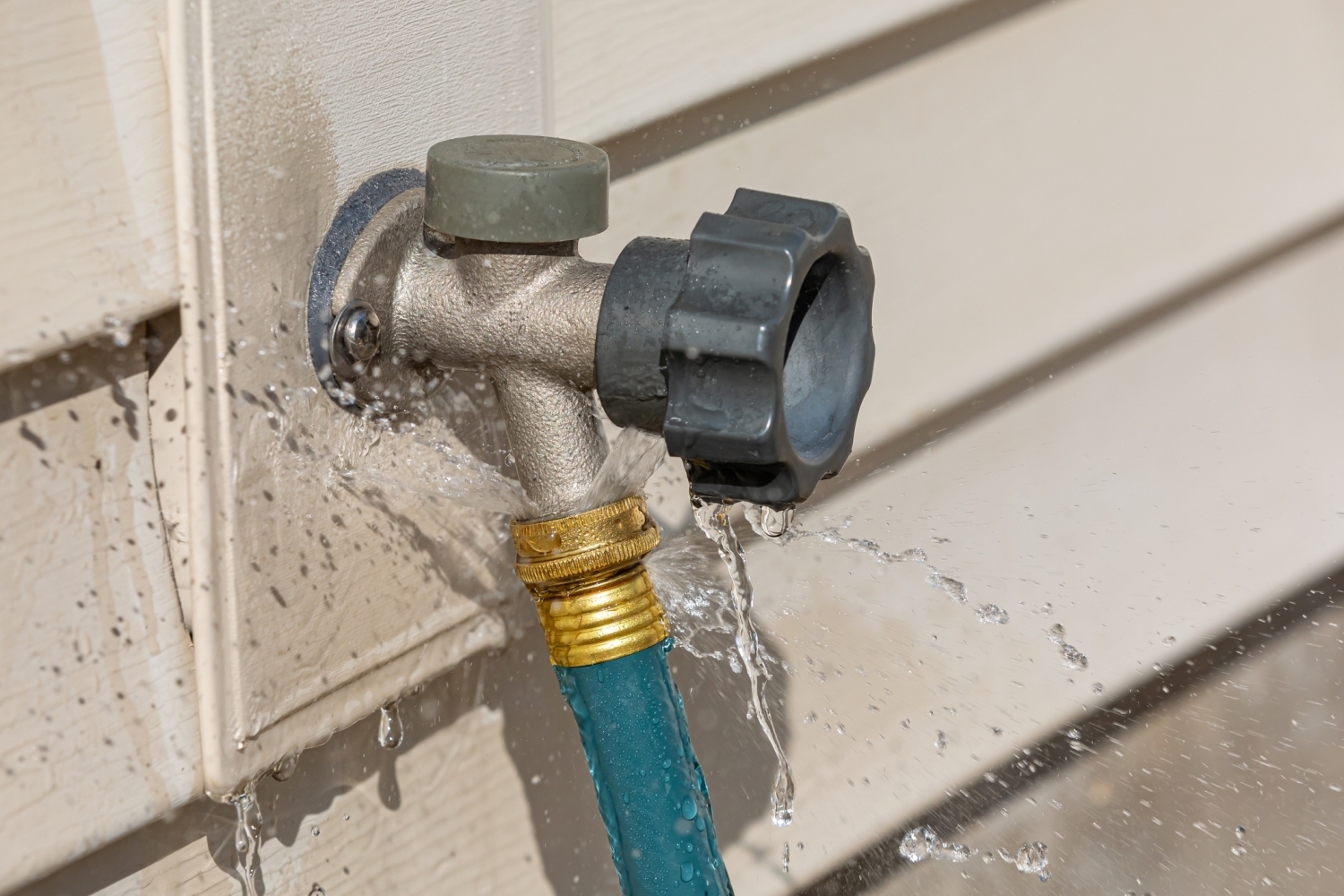
Your outdoor faucets (also called hose bibs or spigots) take a beating over winter, even in a mild Northern California climate. Freeze-thaw cycles, UV exposure, and general wear can leave you with a faucet that drips, leaks around the handle, or doesn't shut off cleanly.
Before you hook up the hose, take a close look at each faucet on your property:
- Any visible cracks, rust, or corrosion on the spigot or pipe
- Dripping from the spout when the faucet is in the off position
- Leaking or moisture around the handle or wall connection
- Reduced water pressure compared to last season
- Signs of a slow leak at the faucet base (water stains, discoloration, or soft ground nearby)
Pro Tip: If your home has a frost-free hose bib, check that the handle turns smoothly and that water stops flowing within a few seconds of shutting off the water. If it keeps dripping, the interior stem may have shifted or failed—that's a repair worth scheduling before you're using the faucet daily.
Walk Your Sprinkler System Before You Run It
Running your sprinkler system for the first time in months without inspecting it first is one of the most common ways homeowners end up with flooded garden beds or a higher-than-expected water bill. A quick walk-through can catch problems early and save you real money throughout the summer.
Start by checking your main shut-off and making sure the sprinkler system valve is fully functional and accessible. Then move zone by zone, running each section briefly while you watch for the warning signs below.
Signs your sprinkler system needs attention:
- Sprinkler heads that don't pop up all the way or stay stuck down
- Heads that spray in the wrong direction or produce an uneven pattern
- Soggy or unusually wet patches in the lawn between watering cycles (a sign of a leak underground)
- Low pressure in one zone but not others
- Sprinkler heads that are cracked, tilted, or visibly damaged
Don't Skip the Backflow Preventer
If your irrigation system has a backflow preventer (and it should), this is a good time to give it a visual check. A backflow preventer is a device that stops irrigation water—which may contain fertilizers, pesticides, or soil—from flowing backward into your home's drinking water supply.
In California, backflow prevention is required for any irrigation system connected to a potable water supply. The California Department of Public Health and most local water agencies have specific requirements around testing and maintenance. If your backflow preventer shows signs of corrosion or leaking, or hasn't been tested, it's worth having a licensed plumber take a look before you run it through a full season.
Signs your backflow preventer may need service:
- Visible rust, corrosion, or mineral buildup on the device
- Dripping or leaking from the relief ports
- The device hasn't been tested or inspected in the past year
- You're not sure if your system has one at all
Adjust Your Watering Schedule for the Season
One of the most overlooked parts of outdoor faucet and sprinkler setup is simply updating the watering schedule on your controller. A schedule set in spring won't match what your lawn and garden actually need in July and August, when temperatures in Redding regularly push past 100 degrees.
General summer watering guidelines for the Redding area:
- Water in the early morning (before 8 a.m.) to reduce evaporation loss
- Aim for 1 to 1.5 inches of water per week for most lawns, adjusted for heat and soil type
- Check your controller settings after any major temperature changes
- Use the rain delay or seasonal adjustment feature on smart controllers if yours has one
- Run each zone long enough for water to penetrate several inches into the soil—a quick sprinkle does more harm than good
Pro Tip: If you're not sure how much water your sprinkler system is actually delivering, set a few empty tuna cans out in different zones while the system runs. Measure the water in each can after one cycle to get a rough read on output and coverage.
When to Call a Plumber
Most of the inspection steps above are things any homeowner can do on a Saturday morning. But some issues are better handled by someone who knows their way around pipes and pressurized systems. If you run into any of the following, it's a good time to call a professional.
Call a plumber if you find:
- A faucet that won't fully shut off, or one that leaks at the wall
- A sprinkler zone with dramatically low pressure (possible underground leak)
- A backflow preventer that's leaking or that hasn't been tested
- Water bubbling up from the ground near your irrigation lines
- A hose bib that feels loose or is pulling away from the exterior wall
FAQs About Outdoor Faucets & Sprinklers
Our team gets many questions from homeowners about their outdoor plumbing systems. Here are answers to the most common ones:
How do I know if my outdoor faucet has a slow leak?
Turn the faucet off completely, then dry the spout and place a piece of paper towel or a dry cloth under it. Check back in 10 to 15 minutes. Any moisture or dripping indicates the faucet isn't sealing properly. You may also notice higher water usage on your bill without a clear reason, which is another common indicator of a slow drip somewhere in your outdoor plumbing.
How often should I replace my outdoor faucet or hose bib?
Outdoor faucets don't have a fixed expiration date, but most last 10 to 20 years, depending on the material, usage, and maintenance. If your hose bib is consistently dripping, difficult to turn, or showing visible corrosion, it may be time for a replacement rather than another repair. A licensed plumber can assess whether a simple washer swap will do the job or whether replacing the whole faucet makes more sense in the long term.
Can a dripping outdoor faucet really waste that much water?
A faucet dripping at just one drop per second can waste more than 3,000 gallons of water over the course of a year, according to data from the Environmental Protection Agency’s WaterSense program. In a region like Redding, where summer water demand is high and conservation matters, fixing a dripping hose bib is one of the easiest wins you can make.
Head Into Summer with Confidence
A little prep now goes a long way for outdoor faucets and sprinklers. Catching a cracked fitting, a stuck sprinkler head, or a worn-out faucet washer before the season starts means fewer surprises, a lower water bill, and a yard that actually gets the hydration it needs all summer long.
Talk to Wallner's Redding Plumbing Team
If your outdoor faucet inspection turned up something you'd rather not tackle yourself, Wallner Plumbing Heating & Air is here to help. The Barefoot Plumbers have been serving Redding, Anderson, and Red Bluff since 1968, and we know Northern California's plumbing challenges inside and out. Call (530) 223-5622 or contact us online to schedule your service.