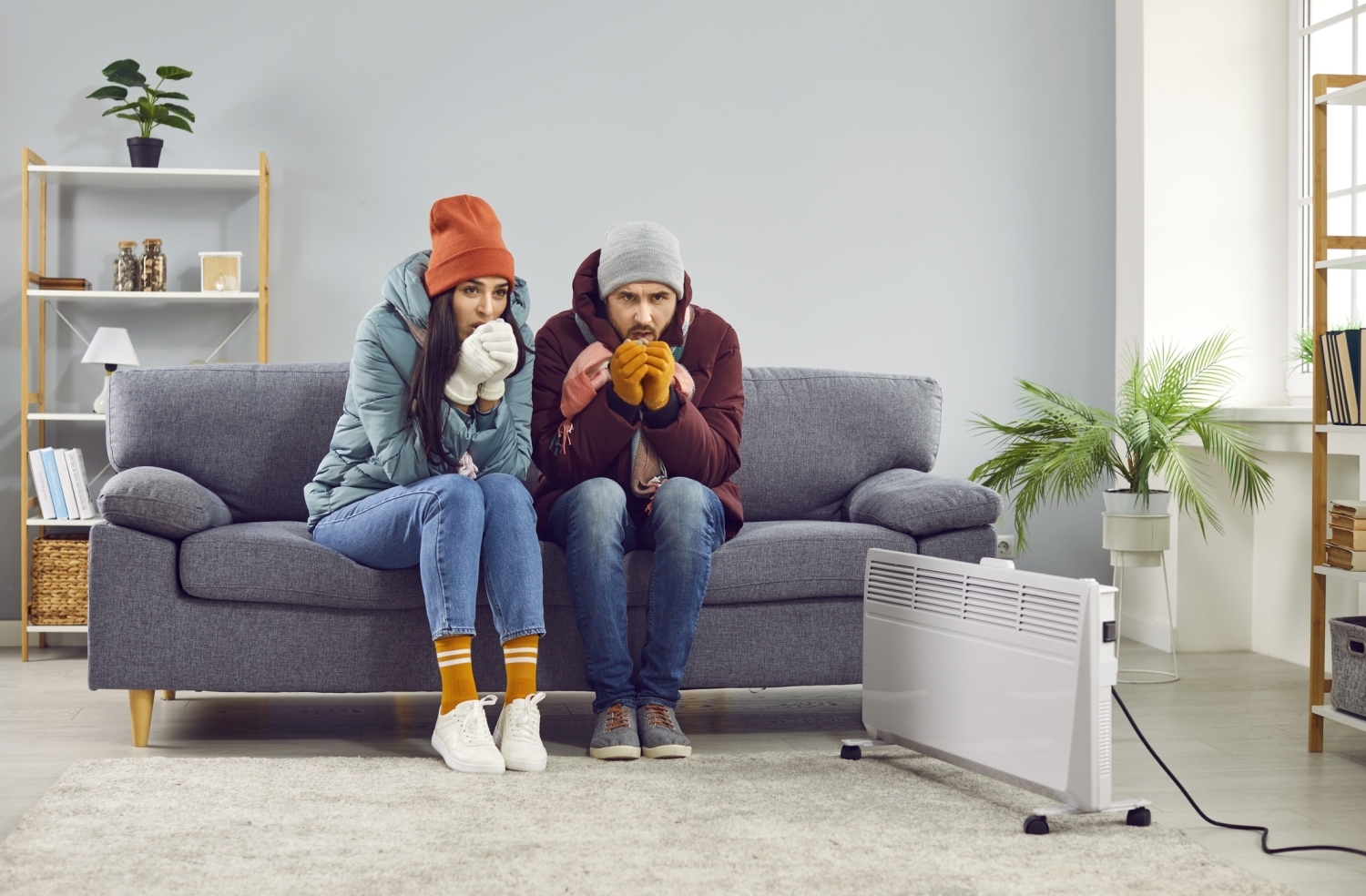
When the temperatures nosedive in January, the last thing you want is a heater throwing in the towel at 2 a.m. The good news? You can spot the early clues. Knowing if your heater can handle January’s coldest nights starts with recognizing a few key signs long before the chill rolls in.
Most homeowners only think about their heater when something smells funny or the house suddenly feels like an unplugged refrigerator. But a little awareness now can spare you a lot of blanket-hoarding later. In this guide, we’ll walk you through the telltale hints, the “uh-oh” noises, and the simple checks that reveal how winter-ready your system really is.
The Frostbite-Free Fast Facts
- Heaters that struggle on cold nights usually show warning signs weeks earlier.
- Odd noises, uneven temps, and nonstop cycling are big red flags.
- Maintenance is the #1 way to avoid mid-winter breakdowns.
- If repairs are stacking up, replacement may be the safer (and warmer) choice.
- A licensed HVAC tech can spot trouble you’d never see coming.
The Biggest Signs Your Heater Won’t Survive January’s Coldest Nights
If local weather apps are starting to use phrases like “arctic blast,” you need a heater that’s going to be reliable now and throughout the rest of the season. These are the signs your system might be waving a white flag.
1. Your Heater Runs Nonstop (But the House Still Feels Cold)
If your heater is cycling endlessly just to keep the temperature steady, that’s not determination, that’s distress. A system that can’t keep up in mild weather won’t magically rally when nighttime temps plummet. Constant running means your heater is losing efficiency, nearing the end of its lifespan, or battling a problem that needs attention ASAP.
Possible causes:
- Clogged filters
- Weak blower motor
- Failing thermostat
- Poor insulation or duct leaks
Pro Tip: Check your filter first. It’s the simplest fix and one of the most common culprits. If the filter’s been around longer than your last haircut, start there.
2. Some Rooms Are Toasty While Others Feel Like Ice Caves
Uneven heating, while a definite comfort issue, is also a clue your system isn’t distributing air properly. Maybe one room feels like a cozy cabin, while the next feels like you’ve stepped out into the snow. That inconsistency often means your system won’t keep up when temperatures drop further.
Common reasons:
- Blocked vents
- Duct leaks
- Undersized or aging system
- Failing blower components
If your home suddenly feels like it is experiencing a bunch of different temps all at once, it’s time to get an HVAC pro to take a look.
3. Strange Noises That Make You Pause
Heaters aren’t supposed to sound like a garage band warming up. Bangs, rattles, grinding, and popcorn-popping noises are all signs that something mechanical is wearing down.
Loud or new noises usually signal:
- Loose components
- Cracked heat exchanger (this is serious)
- Blower motor damage
- Ignition issues
If you hear booming or banging, shut the system down and call a pro. Those can be signs of delayed ignition, which isn’t something to wait out.
4. Your Energy Bills Spike for No Clear Reason
If your heater suddenly costs more to run without keeping your home any warmer, that’s your system saying that it is trying its best while clearly not doing its best. High winter bills often mean your heater is working overtime because something inside is wearing down. Older systems in particular lose efficiency quickly under extreme cold.
5. The System Is Over 15 Years Old
Age isn’t everything, but in HVAC years, 15 is a senior citizen. Older heaters can still work, but they’re more likely to struggle during the coldest nights, and more likely to surprise you with a breakdown at the most inconvenient moment.
If your heater is 15–20 years old and acting up, replacement is usually more cost-effective than continued repairs.
What You Can Do Now to Get Your Heater January-Ready
You can’t control the weather, but you can prepare for it. These steps make a huge difference, whether your heater is brand-new or decades old.
Change Your Air Filter (Yes, Again)
It sounds simple, but clogged filters are often a major source of heating problems, including reduced airflow and overheating. You might even want to swap them out every month, especially during heavy use.
Check Your Thermostat for Accuracy
Sometimes the heater is fine, and it’s the thermostat that’s confused.
Try this quick check:
- Set the thermostat to a higher temperature.
- Wait a few minutes.
- If you hear nothing or feel only weak airflow, the thermostat may be misreading or malfunctioning.
If it’s older than some of your kitchen appliances, consider upgrading.
Inspect Vents and Registers
Blocked vents can trick your heater into working harder than necessary. Make sure furniture, curtains, and seasonal décor aren’t swallowing your airflow.
Schedule a Professional Heater Tune-Up
A licensed HVAC technician can identify issues you might miss, including worn belts, failing motors, cracked exchangers, airflow problems, ignition issues, and safety concerns. A tune-up in December can prevent an emergency in January.
When It’s Time to Consider a Replacement Instead of Another Repair
Repairs can be great… until you’re spending more time fixing your heater than actually enjoying its warmth. If you’re calling for service more than twice a season, or your system is old enough to remember life before Wi-Fi, upgrading may be the warmer decision.
Choose replacement when:
- Repairs exceed 50% of the cost of a new system
- The heater is 15–20+ years old
- Your home never feels warm enough
- Your energy bills keep climbing
- Safety issues keep popping up
Wallner’s team can walk you through your replacement options, sizing, rebates, and efficiency ratings, essentially the whole shebang, without the pressure.
Warm Wisdom From Wallner Plumbing
Keeping your heater running through January’s coldest nights comes down to recognizing the warning signs early, maintaining your system regularly, and knowing when it’s time to bring in a professional. A heater that’s efficient, safe, and winter-ready keeps your house feeling good and your heating system working the way it should all winter long.
Ready for Reliable Heat? Call Wallner Plumbing Today
If your heater is struggling, making strange noises, or just can’t keep up, we’re here to get things back on track. Our team at Wallner Plumbing Heating & Air brings decades of experience, friendly service, and dependable results.
Call (530) 732-1361 or contact us online to schedule your heating service today!